The Liberia National Police and the Ministry of Justice have moved swiftly to distance the Government of Liberia from a controversial group calling itself the “National Fula Security of Liberia,” ordering an immediate halt to its activities amid mounting public concern.
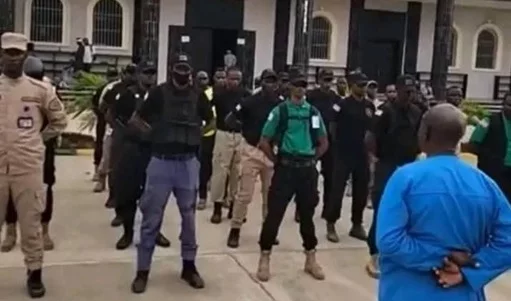
The controversy erupted after a video circulated on Facebook showing individuals in security-style uniforms under the banner of the so-called group. The footage, which appeared to show organized formations and recruitment activity ahead of the Holy Month of Ramadan, triggered a nationwide debate over legality, ethnicity, and national cohesion.
In a statement issued Monday, February 16, 2026, and signed by Deputy Commissioner of Police Cecelia G. Clarke, the Liberia National Police clarified that it neither recognizes nor had prior knowledge of the group before the video surfaced online. The police emphasized that at no time did it meet with, authorize, or endorse the entity.
While urging citizens to remain calm and report suspicious activities, the LNP disclosed that the matter had been forwarded to the Ministry of Justice’s Public Safety Division for review. That review has now resulted in a decisive government directive.
In a press release issued the same day, the Ministry of Justice announced that it had taken note of “alarming reports, images, and public communications” concerning the purported establishment and recruitment of the so-called National Fula Security of Liberia. The Ministry declared unequivocally that no authorization, permit, registration, license, or operational approval had been granted for the creation or operation of such a body.
“Under the laws of Liberia,” the Ministry stated, “the establishment, organization, recruitment, or operation of any security body, paramilitary structure, auxiliary force, or organized enforcement entity requires prior authorization from the Government through the Ministry of Justice’s Division of Public Safety.” The statement further clarified that this process involves formal application, vetting, institutional assessment, security review, and regulatory compliance.
According to the Ministry, no such process was initiated or completed by the organizers of the group. It further confirmed that the individuals associated with the entity had not obtained the requisite permits nor undergone governmental assessment.
Consequently, the Justice Ministry ordered the immediate cessation and desistance of all recruitment, mobilization, promotional, or operational activities linked to the group. It warned that any continuation would constitute a direct violation of Liberian law and would attract the full weight of criminal and administrative sanctions.
The Ministry emphasized that Liberia will not recognize, legitimize, or tolerate the formation of unauthorized security structures, particularly those organized along ethnic, tribal, communal, or sectarian lines. National security and public order, it stressed, are constitutional responsibilities of legally established state institutions and cannot be appropriated by private groups.
The statement, signed by Jutonu Kolie, Director of Press and Public Affairs at the Ministry of Justice, also confirmed that relevant security and regulatory agencies have been instructed to investigate the matter immediately. Where violations are established, enforcement actions will follow in strict accordance with Liberian law.
The firm response from authorities came amid heated public discourse. Critics such as Ogense Dorbor questioned the necessity of the group and called for its dissolution, while others raised concerns about the implications of ethnic-based security branding in a country with a fragile post-war history.
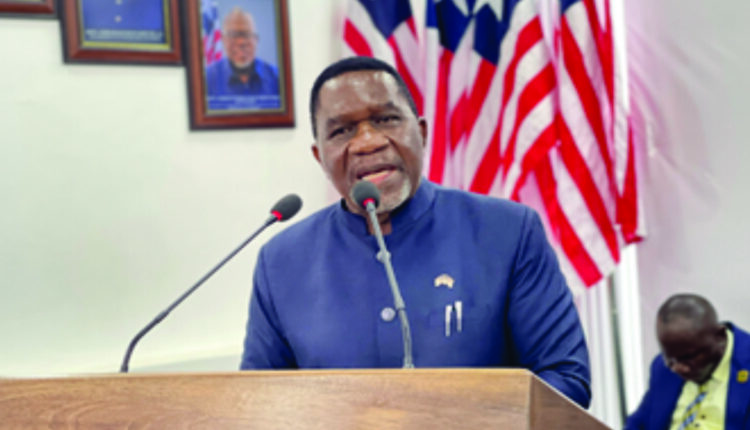
Presidential Special Envoy on Investment Ambassador Mohammed Bah, himself a member of the Fula community, also intervened publicly. Bah stressed that no ethnic group has the authority to establish its own national security structure and described the naming of the group as inappropriate and potentially harmful. He disclosed that he personally urged its leadership to disband.
Meanwhile, Montserrado County Senator Abraham Darius Dillon called for calm and legal clarity, reminding the public that private security entities must first obtain operational permits from the Ministry of Justice, renewable annually, before legally operating in Liberia. He urged the Justice Ministry to provide prompt clarification to ease tensions.